
Salesforce
Connect Salesforce and a new lead gets a WhatsApp welcome within seconds of being created. A Salesforce Flow sends the lead's details to us, and we send your template.
Before you start
- A Salesforce edition that can make outside calls from a Flow (trial orgs cannot), and a Salesforce admin to build the Flow.
- An approved WhatsApp template for the message. See Create a WhatsApp template. Most templates are approved within 24 hours.
- A phone number (with the country code) on your leads.
No keys are needed. The Flow only has to send the lead's details to the URL on the Salesforce page.
Connect Salesforce
Open Salesforce in the app
In the left sidebar, click Integrations. Under CRM, find Salesforce and click Connect. The page has two steps: the message, and the URL to paste into Salesforce.
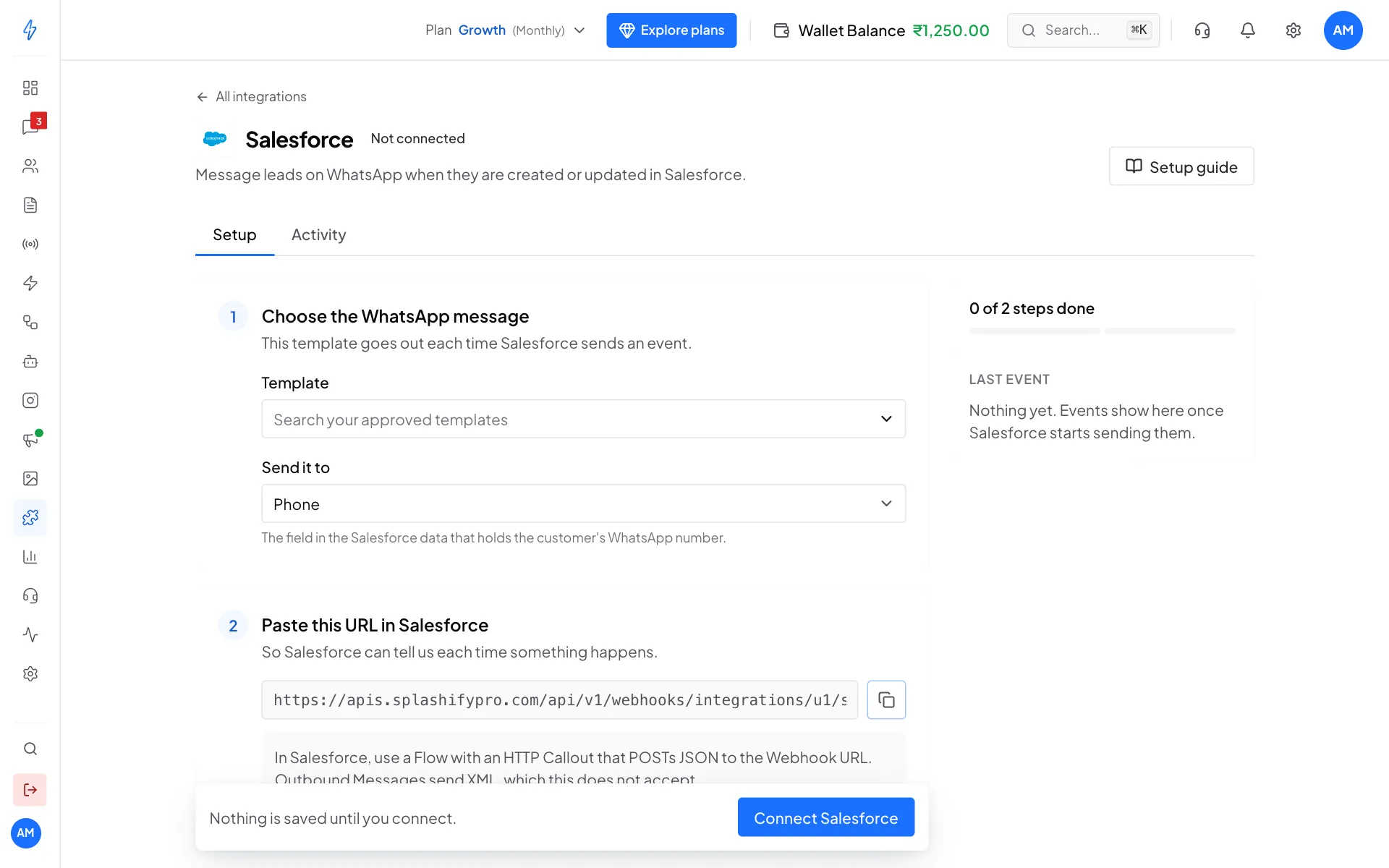
Salesforce needs no keys: pick the message, then copy the URL Choose the WhatsApp message
Under Choose the WhatsApp message, pick a Template. Leave Send it to on Phone (or pick Mobile Phone). Under Fill the variables, choose what fills each blank, for example First Name.
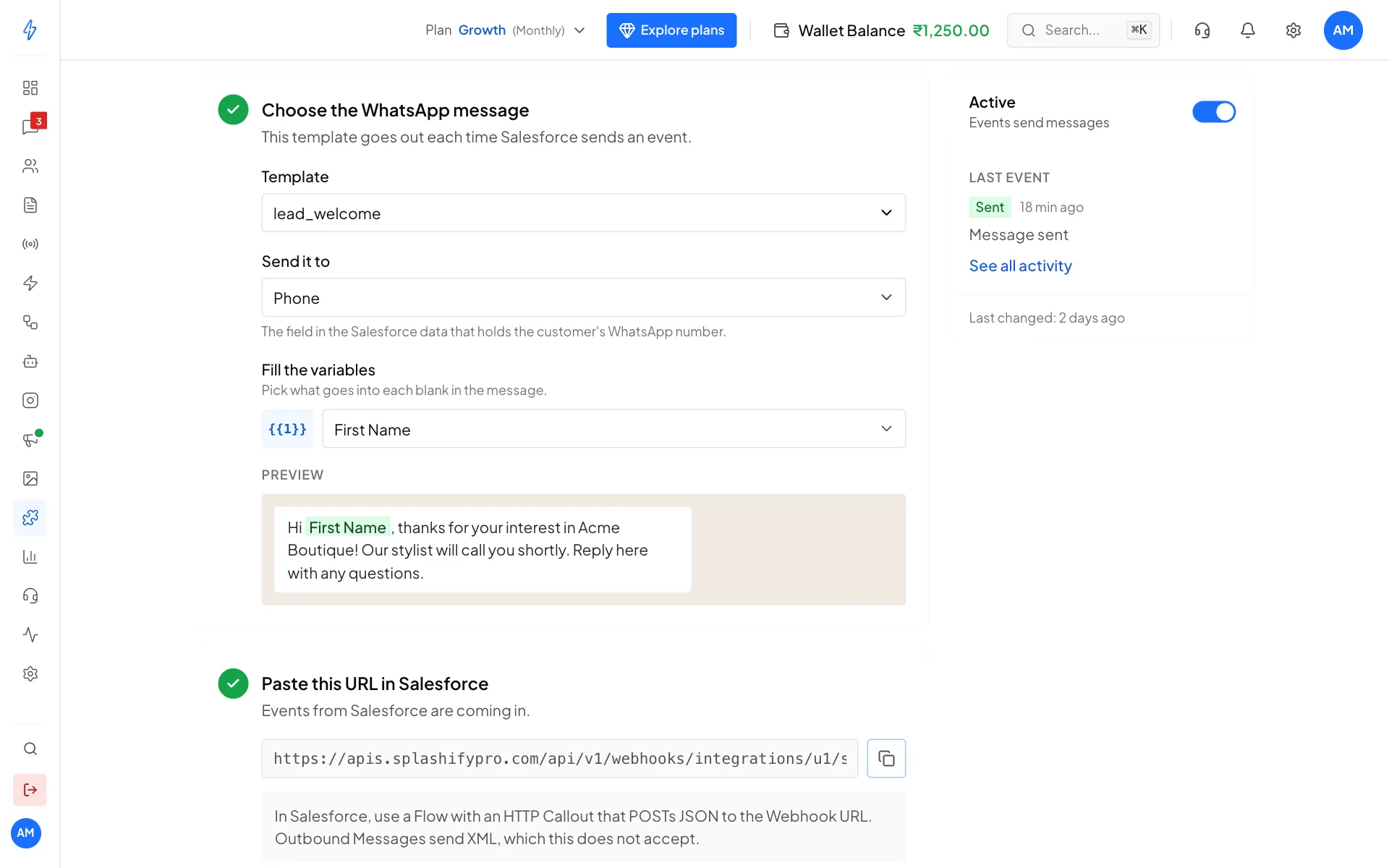
The message each new lead gets Click Connect Salesforce
Click Connect Salesforce in the bar at the bottom, then copy the URL under Paste this URL in Salesforce.
Build a Flow in Salesforce
In Salesforce Setup, open Flows and create a Record-Triggered Flow on the Lead object that runs when a record is created. Add an HTTP Callout action that sends a POST request to the URL you copied, with a JSON body like this (use the Flow's resource picker for each value):
json{ "Phone": "(the lead's Phone)", "MobilePhone": "(the lead's Mobile)", "FirstName": "(the lead's First Name)", "LastName": "(the lead's Last Name)", "Email": "(the lead's Email)", "Company": "(the lead's Company)", "Status": "(the lead's Status)" }The names on the left must be written exactly like this. Salesforce asks for a Named Credential for the address
https://apis.splashifypro.comthe first time. Save and activate the Flow.Check that it works
Create a test lead with your own phone number. On the Salesforce page in our app, open the Activity tab. You should see Sent, Message sent.
Use a Flow, not Outbound Messages
Salesforce Outbound Messages send XML, which cannot be read. They show in Activity as Rejected, The data sent was not valid JSON. Use a Flow with an HTTP Callout that sends JSON.
What you can put in the message
First Name, Last Name, Email, Company, Lead Status, Phone and Mobile Phone, as long as your Flow sends them under the names shown above.
Change, pause or disconnect
- Change the message: make your change, then click Save changes at the bottom.
- Pause: switch Active off on the right.
- Disconnect: click the ⋮ button at the top right, then Disconnect, and confirm. Also deactivate the Flow in Salesforce.
Salesforce callouts to this URL are not signed, so keep the URL private. More fixes are in Troubleshooting.